Disneyland Paris with a Toddler:
Complete Packing List (2026)
Updated June 2026 · 10 min read
The key takeaways for your Disney adventure with a baby
Taking a toddler to Disneyland Paris is a bit like planning an expedition. Between the specific needs of 0–3 year-olds and the demands of a full park day, anticipating the essentials is the difference between a magical trip and a stressful one. You can already picture your little one's wonder-filled smile when they first see Mickey? Great — but don't forget that behind the magic lies nappy changes, bottles to prepare and nap schedules to manage.
The good news? With the right preparation, your stay can be a memory the whole family treasures. No more last-minute purchases at eye-watering park prices, and no more panic moments when baby is crying and you don't have what you need on hand.
Clothing and protection: adapting to the seasons and attractions
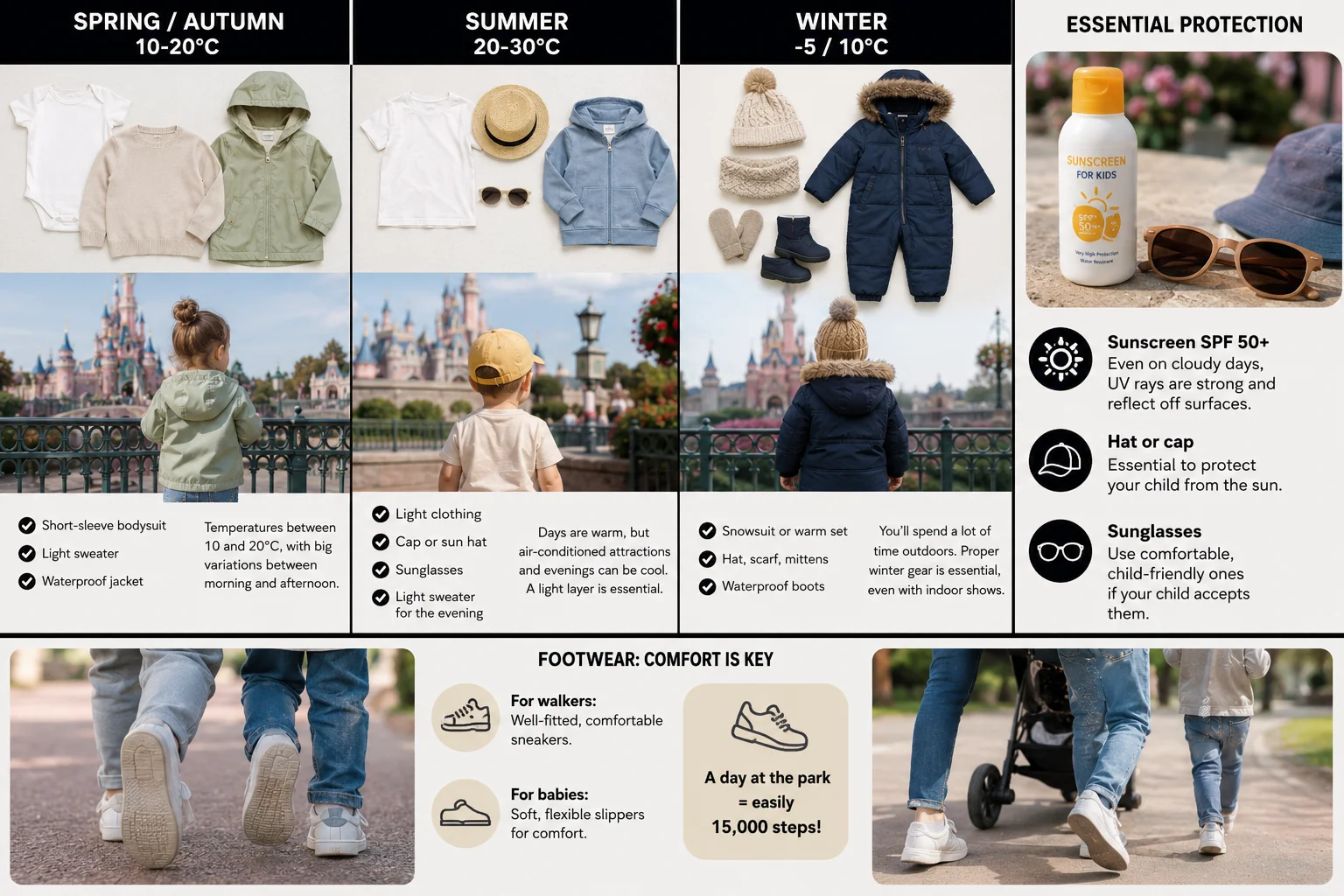
Parisian weather — we all know it: unpredictable. A sunny morning can quickly turn to showers, and evenings stay cool even in summer. For your toddler, the golden rule is layering.
Outfits by season: summer, winter and in-between
Spring and autumn: Pack a short-sleeve bodysuit, a light jumper and a waterproof jacket. Temperatures range between 10 and 20°C, with significant variations between morning and afternoon.
In summer, even on warm days, air-conditioned attractions and evenings call for a light layer. A sun hat or cap is essential, as are age-appropriate sunglasses if your child will wear them.
Winter demands a real strategy: a warm all-in-one or outfit, hat, mittens and waterproof shoes. Remember that you'll spend a lot of time outdoors, even with some parades and shows held inside.
Essential protective accessories
Children's sunscreen (SPF 50 minimum) is your best friend, even on overcast days. The light-coloured surfaces throughout the park reflect UV rays more than you'd expect.
For footwear, prioritise comfort above all: well-fitted trainers for walkers, soft shoes for babies who are carried. And don't forget about your own feet — a day at Disney can easily clock up 15,000 steps!
Food and hydration: what's allowed and what to bring
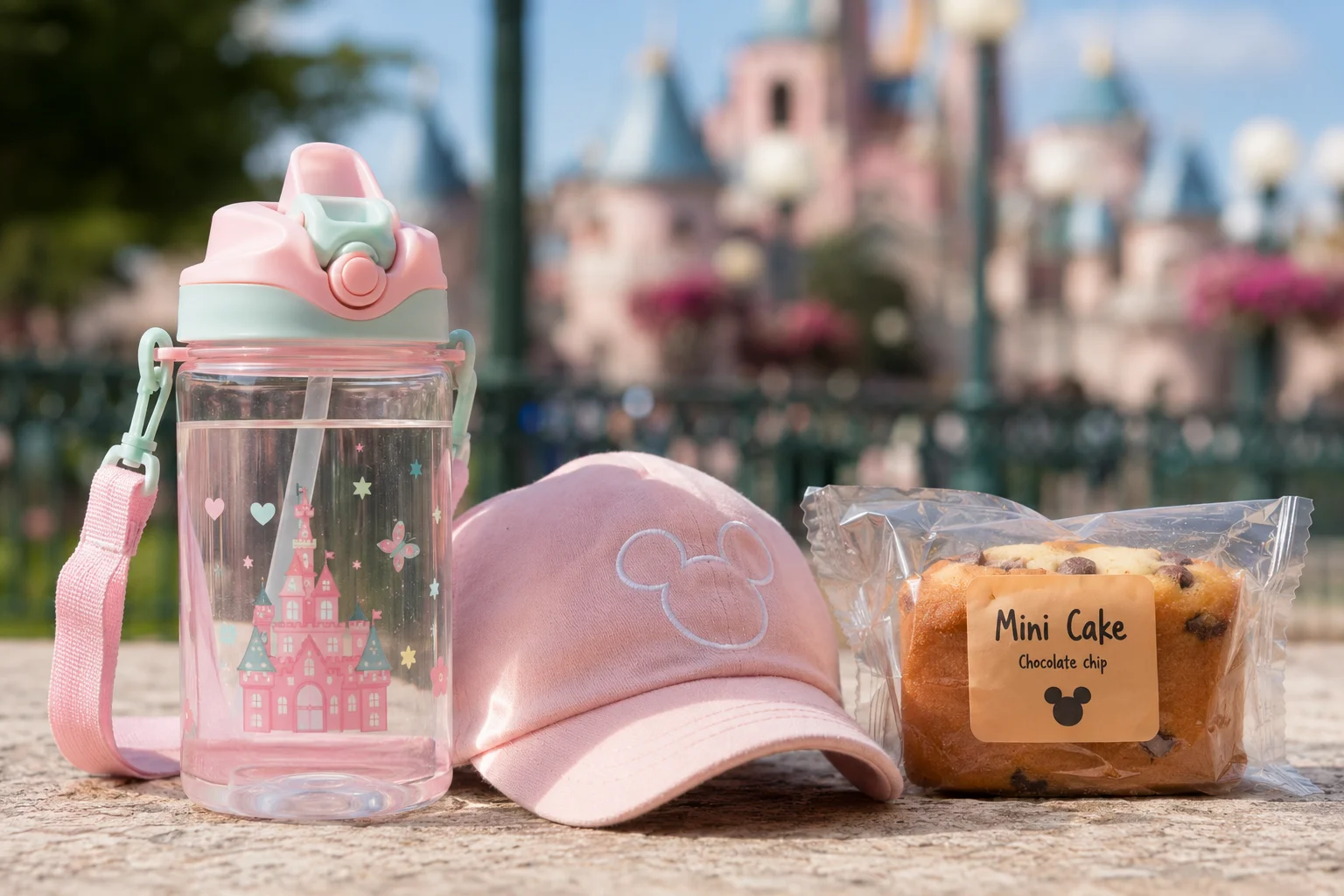
Good news: Disneyland Paris allows baby food and snacks. This flexibility is a game-changer when travelling with a toddler whose meal schedule can be unpredictable.
Allowed and prohibited food at Disneyland Paris
Optimal meal kit for toddlers
Your insulated bag becomes your best friend. Pack some baby food jars (even if your child eats "proper food", they're a lifesaver if they refuse what's on offer), fruit pouches, biscuits and crackers. Wet wipes to clean sticky hands are just as essential as they are discreet.
For hydration, a leak-proof water bottle avoids bag disasters. Water fountains are available throughout the park — handy for refills.
A tried-and-tested tip: always keep a few "joker" biscuits for difficult moments. They'll save you more than once during queues or minor meltdowns.
Baby gear and comfort: making the visit easier

Between cobbled paths, attractions and shows, your equipment needs to be both practical and robust. Leave the fragile kit at home — it will only let you down mid-day.
Pushchair and mobility equipment
The pushchair is your most important investment for the trip. Go for a compact but sturdy model with good wheels (Disney's cobblestones are no joke!). A generous under-seat storage basket means fewer extra bags to carry.
An interesting alternative: hiring on site. Disneyland Paris offers robust pushchairs perfectly suited to the terrain. Expect around €20 per day — but you travel light with no risk of damage.
For babies who prefer to be carried, a sling or ergonomic baby carrier lets you access attraction areas where pushchairs aren't permitted. Test the comfort before you go — a full day of carrying takes preparation!
Nappy-changing kit and on-the-go rest
Your nappy bag becomes your mobile headquarters. Organise it by zone: changing supplies on one side, first aid on the other, snacks in the middle. Pouches stop everything sinking to the bottom.
Essentials in your kit:
- 🧷 Nappies (more than you think — excitement has its effects!)
- 🧻 Wet wipes and hand sanitiser
- 🛍️ Waterproof bags for dirty clothes
- 🧴 Portable changing mat
- 🧸 Comfort toy and spare dummy
For impromptu naps, a lightweight blanket and a small inflatable pillow can turn any bench into a rest spot. The gardens near the castle offer perfect shaded spaces for a break.
Entertainment and managing waiting times
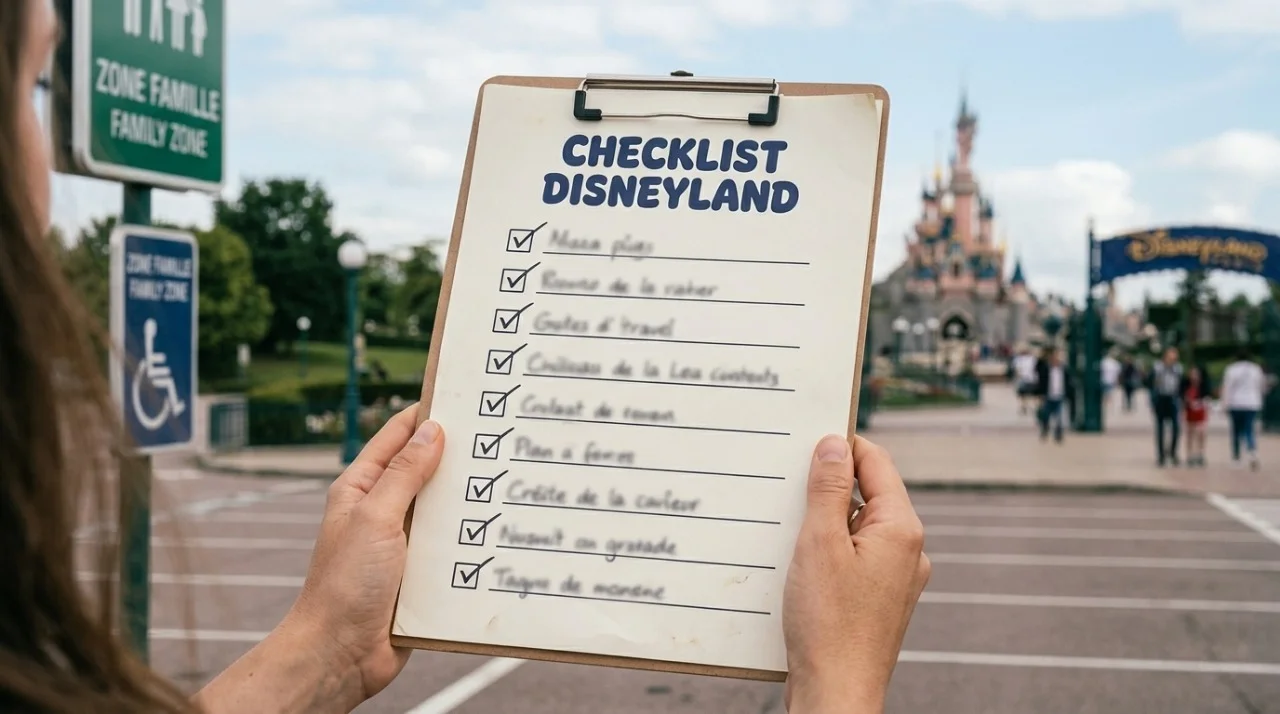
Even with the virtual queue system, waiting happens. And with a toddler, five minutes can feel like an eternity without something planned.
Portable boredom-buster kit
Your anti-tantrum arsenal fits in a small pouch: a few quiet toys (fellow visitors will thank you), durable board books, repositionable stickers. Soap bubbles also work miracles, even if they don't last long.
Screens? They can be used sparingly in genuinely difficult moments. A downloaded playlist of nursery rhymes or a few short episodes can rescue a tense situation. The ideal remains interaction: finger games, singing, observing the surroundings together.
Calming strategies in stressful situations
When things unravel — and it happens to the best families — having a plan helps. First, remove yourselves from the crowd: gardens, restaurant terraces or Baby Care Centres offer calmer spaces.
Physical contact reassures: hold the child, offer a drink, sing softly. Sometimes a simple stroll in the pushchair is enough to reset things.
Don't hesitate to take regular breaks, even if your schedule feels light. A rested child enjoys the park far more than an overstimulated one.
Final age-by-age checklist and transport tips
So nothing slips through the net, here are your checklists by age group. Print them out and tick as you go!
Checklists by age: 0–12 months, 1–2 years, 2–3 years
0–12 months — Baby essentials:
- Infant formula and bottles (more than you need)
- Spare bodysuits and sleepsuits
- Current nappy size + one size up
- Ergonomic baby carrier
- Dummies and comfort toy (+ backups)
- Thermometer and saline nasal spray
1–2 years — Exploration begins:
- Comfortable shoes + soft indoor shoes
- Varied snacks (fruit pouches, biscuits)
- Silent sensory toys
- Sunscreen and sunglasses
- Cobble-ready pushchair
- Hooded waterproof jacket
2–3 years — Growing independence:
- Full change of clothes + extra underwear
- Personalised leak-proof water bottle
- Disney picture book
- Stickers and small notebook
- Full sun protection
- Small rewards for good behaviour
Don't forget to check out our guide on things families often forget at Disneyland Paris to round out your preparation. And if rain is forecast, read our tips for Disneyland Paris in the rain with children.
Optimising your trip with a transfer service
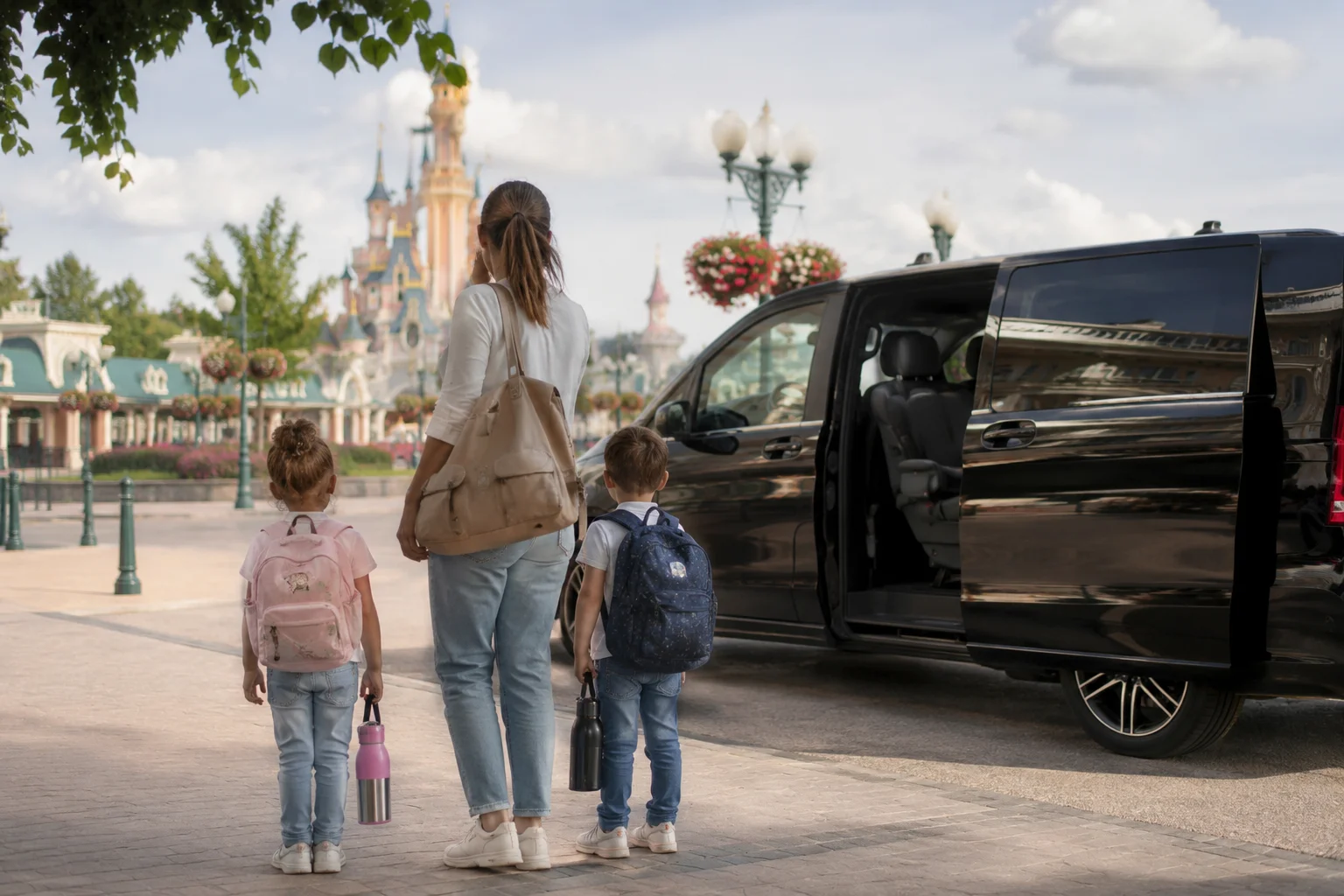
Once you've prepared all this equipment, the transport question looms. Between suitcases, pushchair, bags and a tired child, public transport can quickly become an obstacle course.
A private transfer service has serious advantages: no connections with a crying baby, space to spread out your gear, the option to pause if needed. You arrive at the park relaxed — and that head start matters for a day that's about to be intense.
The return trip at the end of the day? Even more appreciated. Your toddler can sleep peacefully on the way back while you quietly recover from everything. Sometimes this small investment makes all the difference to the quality of your family stay.
For safe travel, discover the best route from CDG to Disneyland Paris with children to optimise your arrival.
Book your Disneyland Paris tickets in advance
🎟️ Buy tickets on GetYourGuideAffiliate link — we earn a commission at no extra cost to you
Book your family transfer — baby seats included, pushchairs welcome
Door-to-door from CDG, Orly, Paris Centre or Beauvais. No folding, no crowds, no stress.
✨ Free quote